

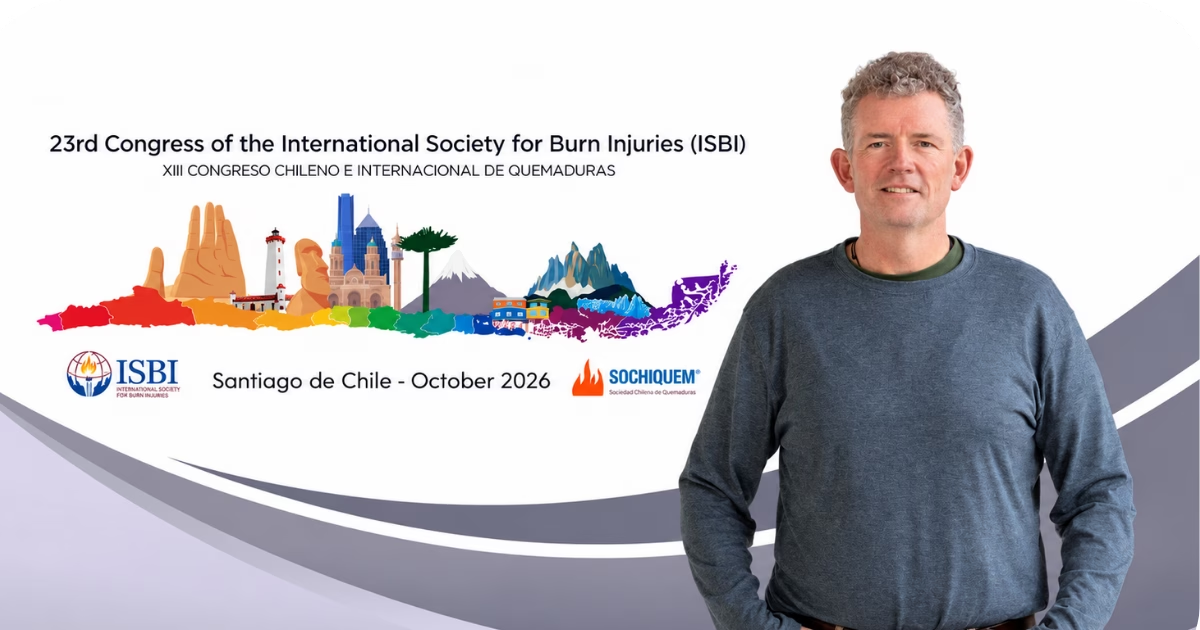
Highlights from ISBI 2026
Associate Prof Dale Edgar presented five scientific studies and led discussions on the future of burn care at ISBI 2026 in Santiago, Chile.
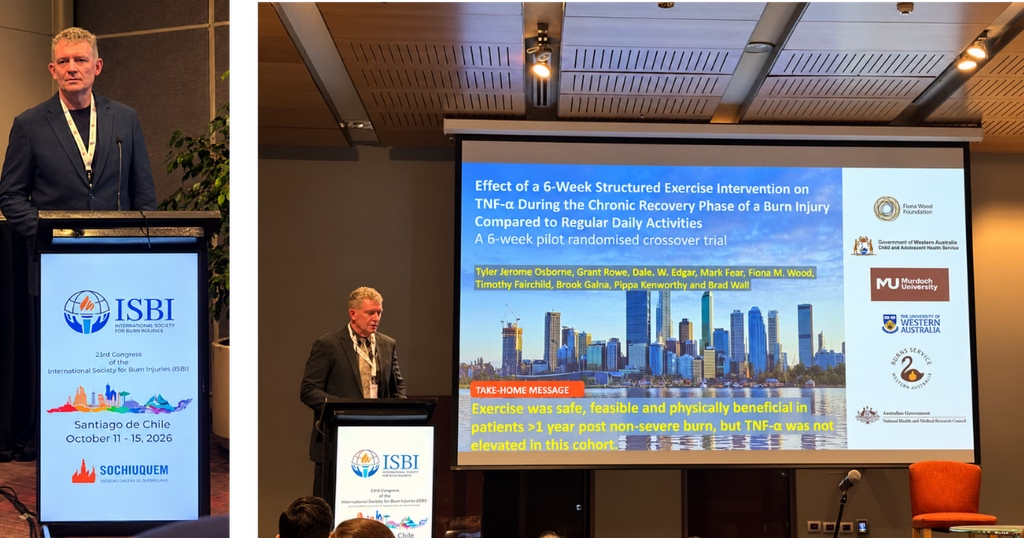
Fiona Wood Foundation Senior Research Fellow Associate Professor Dale Edgar represented the Foundation at the 23rd Congress of the International Society for Burn Injuries (ISBI 2026), held in Santiago, Chile, from 11–16 October 2026. The congress brought together clinicians, scientists and research leaders from around the world to share advances in burn care.
Dale delivered five scientific presentations highlighting studies undertaken by Foundation researchers and collaborators, spanning skin regeneration, paediatric burn injury, rehabilitation and long-term health outcomes.
- Harnessing Adipose Tissue and ReCell® for Skin RegenerationInvestigating the enrichment of autologous cell suspensions (using a patient’s own cells) with adipose-derived stem cells and stromal vascular fraction (a mixture of cells obtained from fat tissue) for deep full-thickness wound repair.
- Paediatric Burn Injury and Brain Changes via MRIExploring neuroimaging (brain imaging) and quantitative mapping of post-burn neuro-structural changes (changes in brain structure), including mechanisms potentially associated with mental health vulnerability following paediatric burn injury.
- The EXBIN Exercise Study in Burn RehabilitationExamining clinical exercise physiology and functional testing through standardised resistance and aerobic exercise protocols (structured strength and cardiovascular exercise programs) during acute and sub-acute rehabilitation (the early stages of recovery).
- Motor Cortex rTMS Neuromodulation for RecoveryInvestigating repetitive transcranial magnetic stimulation (rTMS), a non-invasive technique that uses magnetic pulses to influence brain activity, and its potential to support cortical plasticity (the brain’s ability to adapt and reorganise) and functional recovery.
- Paediatric NMR Lipoproteomics and Systemic BiomarkersUsing nuclear magnetic resonance (NMR) spectroscopy (a technique for analysing molecules in biological samples) to examine inflammatory and metabolic changes associated with potential cardiovascular disease risk following paediatric burn injury.
Leadership and Collaboration
Alongside the scientific presentations, Dale moderated The Future of Burn Research, a panel discussion examining the role of scientific inquiry in achieving excellence in burn care.
The session brought together experts from several countries to consider how artificial intelligence and emerging technologies may shape future investigations and clinical practice, while emphasising the importance of human connection and multidisciplinary approaches.
Dale also met with colleagues to progress collaborative publications and explore opportunities in rehabilitation, consumer involvement and long-term recovery. He contributed to the ISBI Rehab to Publication initiative, which assists emerging rehabilitation therapists, particularly those from developing nations, in preparing manuscripts for peer review.
Advancing World-Leading Research
Engagement with leading scientific conferences is an important part of the Foundation’s world-leading research pillar. ISBI 2026 offered a valuable opportunity to share findings with the global burns community, strengthen professional networks and foster partnerships that help translate scientific advances into clinical practice.
We sincerely thank Dale for his leadership and dedication in representing the Foundation at ISBI 2026. It is an honour to see the work of our researchers and collaborators presented on the world stage, advancing our shared goal of improving care and long-term outcomes for people who have experienced burn injuries.