

ULFAB Connect: Life After Burn Study
Western Australian Patient Self-Reported Impact on Quality of Life After Burn Injury: Part 1 – Ultralong Follow-up After Burn (ULFAB)
The ULFAB Connect: Life After Burn Study invites adults with lived experience of burn injury to share what life is like now through a short, confidential survey.
This research, led by the Foundation and the Burn Service of Western Australia, aims to improve understanding of long-term recovery and quality of life after burn injury.

Why are we doing this survey?
This research project is the first WA study to explore long-term quality of life after burn injury, inviting adults who have received burn care in WA since 1993 to share their experiences.
Why this research matters
Burn injury can affect more than the skin. While early care focuses on healing and physical recovery, some people experience longer-term impacts on movement, emotional wellbeing, and everyday life. In WA, specialist burn care is typically provided for up to two years, but there is limited understanding of how individuals are doing five, ten, or even twenty years later.
Your experience is important
Recovery is different for everyone. By sharing your lived experience, you are helping researchers better understand life after burn injury. Your contribution will support future care and research to better reflect the needs, priorities, and experiences of those impacted by burn injury.
What this research aims to understand
Who can participate?

We are able to only include individuals who have received their burn care in Western Australia for this study. This means we cannot collect information from treatment received interstate or overseas.
To find out more about the purpose of the ULFAB Connect: Life After Burn Study, what participation involves, and how your information will be used and protected view the Participation Information Sheets and Consent Form.
About the Survey
If you decide to take part in the research project, you will complete a short, confidential survey.
START The SurveyIt should take about 10-15 minutes and involves:
1
Questions about you and your past burn injury
Such as when it happened and what treatment you received.
2
Five questions about your physical and emotional health today
Covering mobility, self-care, usual activities, pain, and emotional wellbeing (using a scale from 1 ‘no problems’ to 5 ‘extreme problems’).
3
One final question asking you to rate your overall health
On a scale from 0 (worst imaginable) to 100 (best imaginable).
The survey is hosted on REDCap, a secure research platform used by WA Health. Your responses will be stored securely for seven years as per WA Health requirements, then safely deleted.
Looking After You
By choosing to take part in this research, you are not expected to experience any harm.
Some questions may, however, bring up memories or feelings about your injury or recovery. If this happens, you are welcome to skip a question or stop the survey at any time.
If you do feel upset, support is available:
13 92 76 (24/7, Aboriginal and Torres Strait Islander crisis support line).
This survey is not a medical or psychological assessment. If your answers suggest distress, a gentle reminder will appear on screen encouraging you to reach out for support.
If you ever feel suicidal or in danger of harming yourself, please call Lifeline Australia on 13 11 14 immediately or go to your nearest Emergency Department.
Who to Contact for More Information
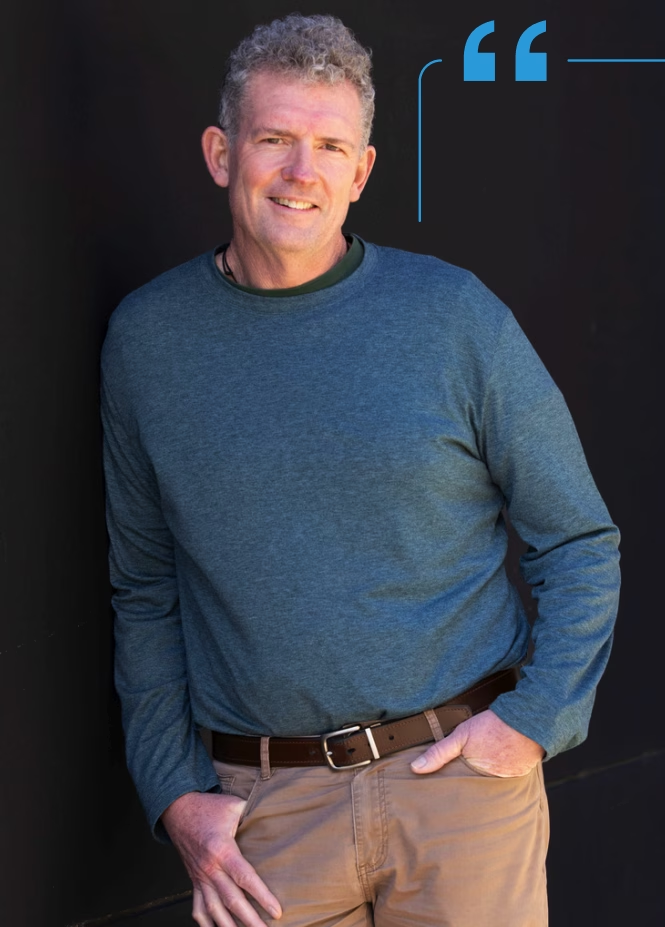
On behalf of the Burn Service of Western Australia and the Fiona Wood Foundation, thank you for considering being involved in this important work.
Associate Professor Dale Edgar
If you have any questions or concerns about the ULFAB Connect: Life After Burn Study, you are welcome to contact the Coordinating Principal Investigator:
Associate Professor Dale Edgar


Ethics Approval
The Central WA Health Human Research Ethics Committee has approved this research project. If you have a complaint about how the study is being conducted or are concerned about your rights as a participant, please contact:

Please quote the following project number: RGS00007746
Future Research and Communications
Optional Future Research Contact – ULFAB Connect: Life After Burn Study
As part of the ULFAB Connect: Life After Burn Study, you will be asked whether you consent to being contacted in the future about research opportunities.
If you provide consent, you agree that the Fiona Wood Foundation and/or the Burn Service of Western Australia may contact you about future research studies related to burn care that you may be eligible to participate in.
This consent relates only to research opportunities.
It is separate from your participation in the ULFAB Connect: Life After Burn Study. It does not affect your care or treatment and can be withdrawn at any time.
If you consent, your contact details will be securely stored and used solely to invite you to future research studies.
FWF Burn Family Community


Join our Burn Family.
Participation is voluntary, and preferences can be updated or withdrawn at any time.
Learn MoreSocial Media
Poster and Social Media Toolkit
We kindly ask that these materials be shared as provided, so the details remain accurate and the study is shared as intended.
ULFAB Connect: Life After Burn Study Digital Toolkit
Dropbox Folder for social media tiles and posters
Post on Facebook and Instagram
Include in newsletters or updates

Add the flyer or poster exactly as provided.
For more information, direct readers to the Fiona Wood Foundation website or the contact details on the flyer.
Display in your spaces
Print and display posters in clinics, community centres, or workplaces.
If people want more information about the study or participation, direct them to the Fiona Wood Foundation website or Dr Dale Edgar (contact details are included on all materials).